Wildlife Tourism: How to Tell Conservation From Animal Exploitation
Some of the most powerful travel memories involve animals.
A turtle rising beside you while snorkeling. Elephants crossing a dusty plain. Whales surfacing and disappearing again before you fully understand what you have seen. Birds calling before sunrise. A reef suddenly alive with colour and movement.
These moments can make travel feel almost sacred.
They remind us that the world is bigger than us. Wilder than us. More alive than the version of nature we often experience from behind screens, windows and city routines.
But this is also where travel becomes complicated.
Because the same love that makes us want to protect animals can also make us want to touch them, hold them, ride them, feed them, pose with them or get as close as possible.
And tourism is very good at selling closeness.
A “once-in-a-lifetime encounter.”
A “sanctuary.”
A “rescue experience.”
A “bucket-list photo.”
A chance to be near an animal we have dreamed of seeing since childhood.
Sometimes these experiences support conservation, local livelihoods and habitat protection. Sometimes they help make animals worth more alive, wild and protected than hunted, captured or removed.
And sometimes they are exploitation with better branding.
That is the tension at the heart of wildlife tourism.
Some animals suffer because tourism demands control. Others survive because tourism rewards their freedom.
Wildlife tourism is not one thing
Wildlife tourism can mean watching whales from a regulated boat, going on safari in a protected area, diving in a marine park, joining a birdwatching trip with a local guide or visiting a turtle nesting beach with trained rangers.
It can also mean elephant rides, tiger selfies, captive dolphin swims, monkey photo props, snake shows, crocodile performances or “sanctuaries” where animals are bred, handled and displayed for visitors.
The same phrase can describe both protection and exploitation.
UN Tourism describes wildlife tourism as travel connected to observing and interacting with local animal and plant life, especially in natural habitats. But in practice, travelers see that label used for very different kinds of experiences — from conservation-focused nature tourism to entertainment built around captive or controlled animals.
That is why we need to look closer.
Not at the marketing.
At the animal.
When tourism helps animals
It would be too simple to say that wildlife tourism is bad.
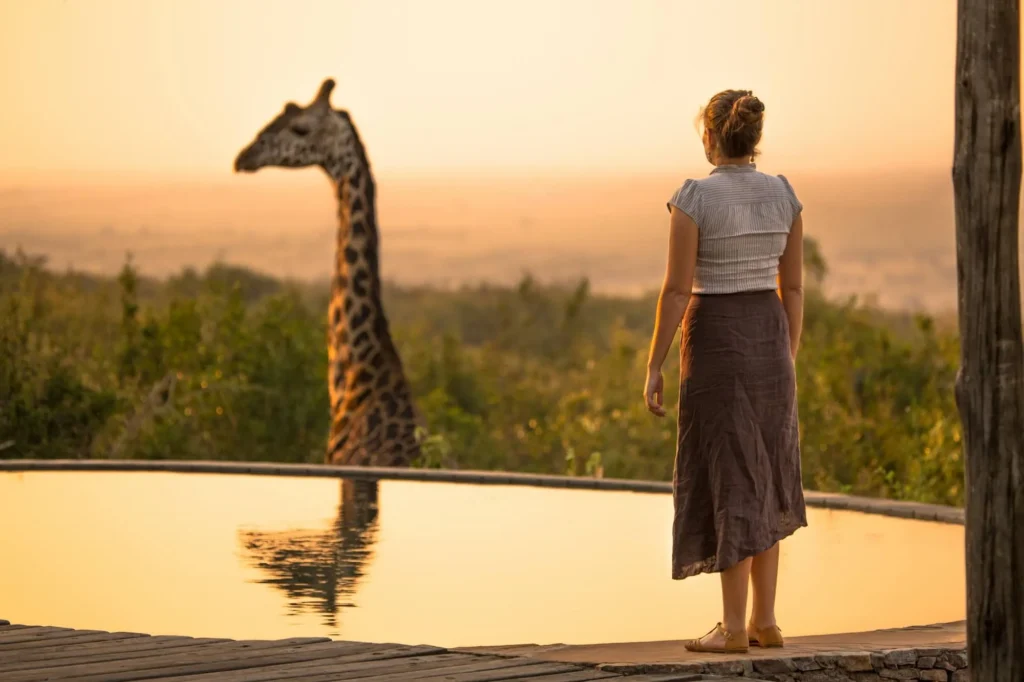
In many places, tourism helps fund conservation. Park fees can support protected areas. Local guides can earn income from wildlife that remains alive and free. Communities can benefit from protecting forests, reefs, wetlands and migration routes. Marine parks, turtle projects, safari conservancies, ranger patrols and research programmes often rely, at least partly, on visitor income.
IUCN’s guidance on tourism and visitor management in protected areas focuses on how tourism can be planned and managed in ways that support conservation, local economies and human wellbeing.
This is the hopeful side of wildlife tourism.
A safari can create jobs for guides, rangers, drivers and lodge staff. A dive fee can help fund marine protection. A whale watching trip can turn curiosity into awareness. A turtle nesting tour, if properly managed, can support patrols and reduce poaching.
Tourism can make people care.
But care is not enough.
Because tourism can also turn that care into demand — and demand becomes dangerous when what we want is not just to see an animal, but to possess a moment with it.
When being seen protects — and when being seen harms
This is where wildlife tourism becomes uncomfortable.
Sometimes animals suffer because they are tourist attractions.
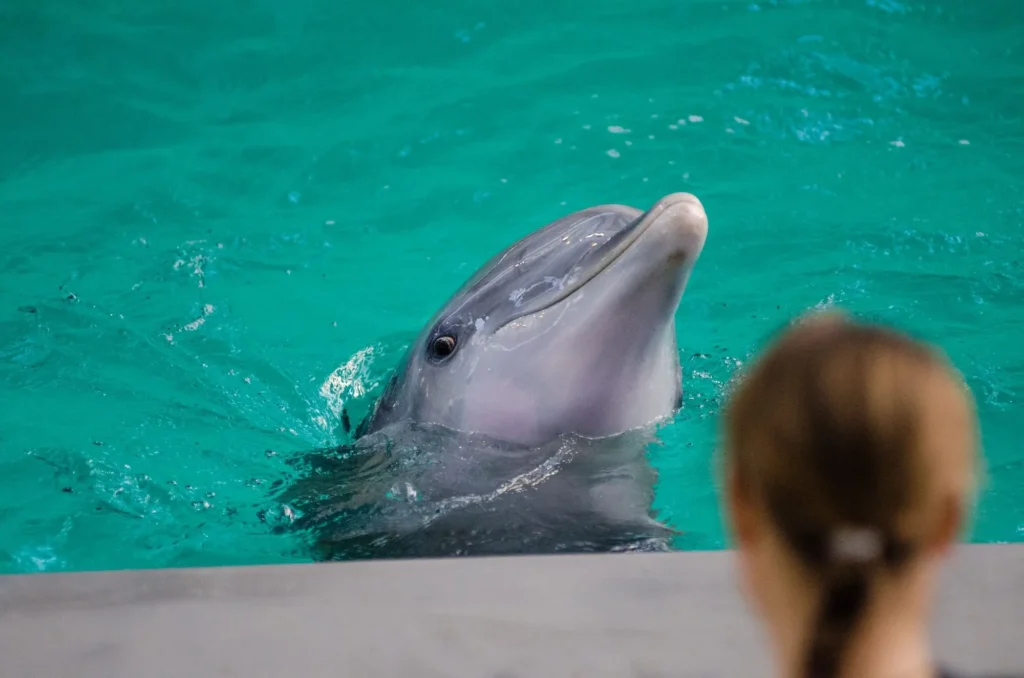
Captive dolphins are one of the clearest examples. A dolphin in a tank may look playful to visitors, but the experience often exists because the animal has been confined, trained and turned into entertainment. World Animal Protection urges travelers and travel companies to stop supporting captive dolphin experiences and to protect dolphins in the wild instead.
But sometimes being a tourist attraction can help protect an animal.
Sharks in The Bahamas are a powerful example. For a long time, sharks around the world were mainly valued through fishing, fins, fear or removal. In The Bahamas, shark diving helped tell a different economic story: sharks became worth more alive in the water than dead on a boat.
A study reported by Pew found that sharks and rays contributed around US$114 million to the Bahamian economy in 2014, with 99% of that value generated by shark and ray tourism. The Bahamas also created a shark sanctuary in 2011, protecting more than 40 shark species in Bahamian waters.
That does not mean every shark tourism experience is automatically perfect. Feeding, crowding, poor boat behaviour and pressure for guaranteed sightings can still raise questions.
But it shows the other side of the tension.
Tourism can exploit animals when it demands control.
Tourism can protect animals when it rewards their freedom.
The difference is not whether an animal becomes part of a travel experience. The difference is whether tourism helps that animal stay wild, alive and protected — or turns it into something we can touch, command or consume.
Observation or access?
This is the simplest test I use.
Is the experience built around observation — or access?
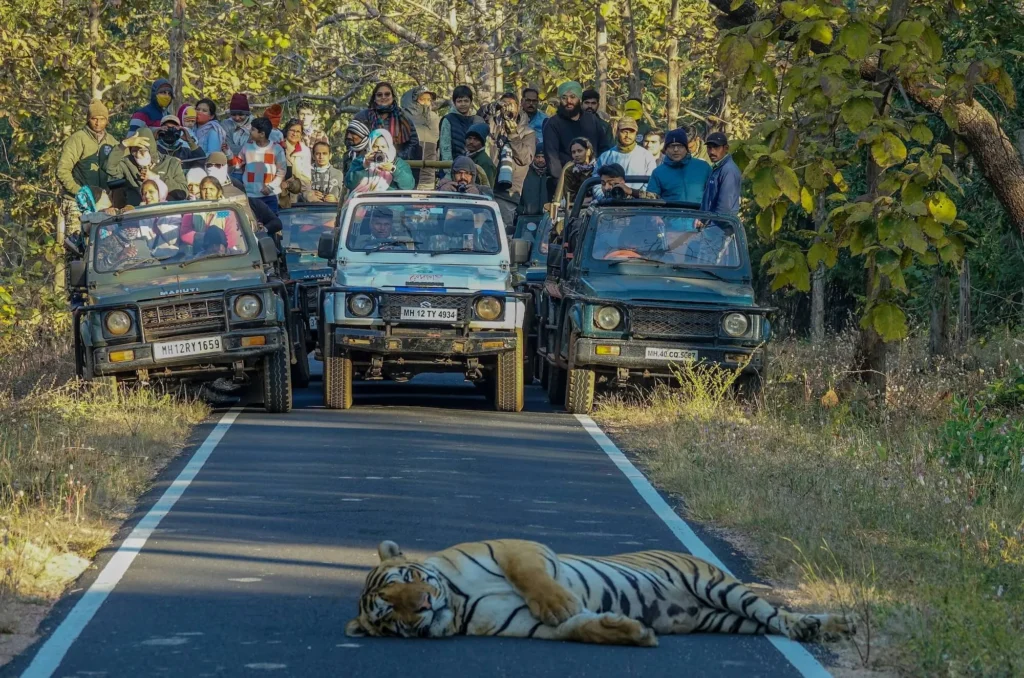
Observation means watching an animal behave as naturally as possible, from a respectful distance, with rules that protect the animal even if they make the experience less convenient for the visitor.
Access means touching, holding, riding, feeding, posing, controlling, crowding or guaranteeing close contact.
Observation asks:
Can the animal move freely?
Can it choose to leave?
Is it behaving naturally?
Are visitors kept at a distance?
Would the experience still work if the animal ignored us?
Access asks:
Can I touch it?
Can I ride it?
Can I hold it?
Can I feed it?
Can I get the photo?
The closer an experience is designed to bring you, the more carefully you need to ask who that closeness is costing.
A good wildlife encounter may not give you the closest photo.
It should give the animal the most space.
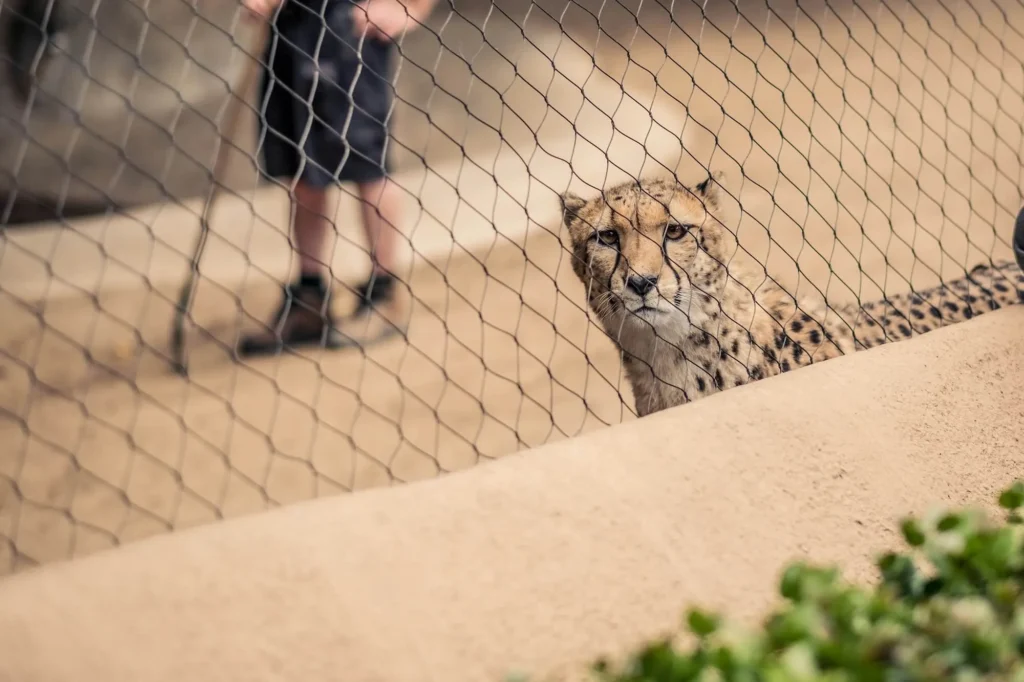
Red flags travelers should not ignore
Some animal attractions are easy to recognize as problematic. Others are much better disguised.
Be cautious if:
- You can ride a wild animal.
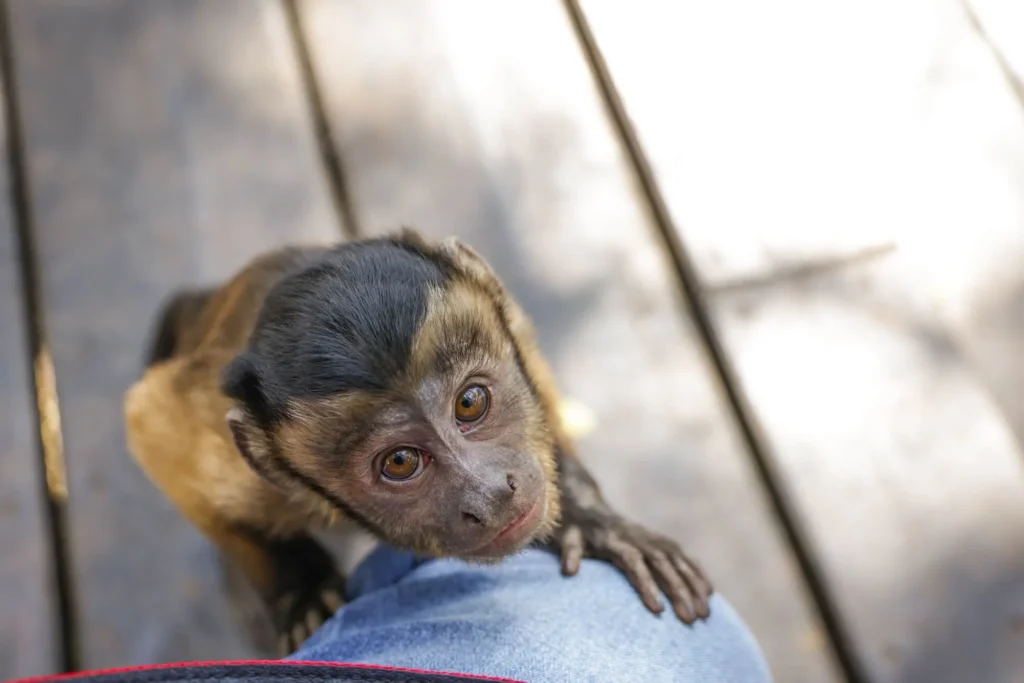
- You can hold, hug, kiss or take selfies with wild animals.
- Baby animals are used for tourist photos.
- Animals perform tricks or wear costumes.
- The venue guarantees close contact.
- Staff use chains, hooks, sticks, ropes or harsh control.
- Animals are pacing, rocking, swaying or showing repetitive stress behaviour.
- The “sanctuary” always seems to have babies.
- The venue breeds animals but calls itself a rescue center.
- Visitors are encouraged to feed wild animals for entertainment.
- Staff cannot explain where the animals came from or what happens to them later.
- The experience seems designed around the visitor’s photo rather than the animal’s needs.
ABTA’s animal welfare guidance lists several practices as unacceptable, including tourist photo opportunities with wild animals where the animal cannot move away, breeding or commercial trade in sanctuaries, and tourist contact or feeding of elephants without a barrier.
That does not mean travelers have to become animal welfare experts before every trip.
But we do need to stop believing every friendly guide, glossy brochure or “ethical sanctuary” sign without asking questions.
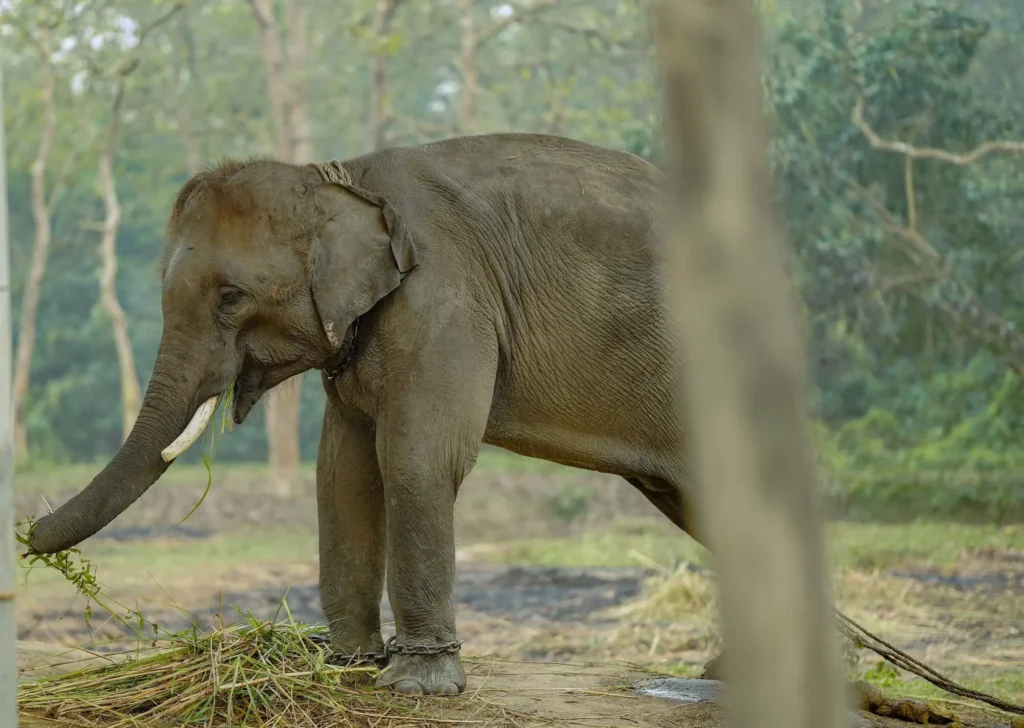
The problem with the word sanctuary
The word sanctuary should mean safety.
In tourism, it does not always mean that.
Sometimes a sanctuary is a true place of rescue, care and protection. Sometimes animals are there because they cannot return to the wild. Sometimes a facility supports rehabilitation, veterinary treatment, education or conservation.
But sometimes “sanctuary” is simply the word that replaced “show.”
A real rescue or rehabilitation center should be able to explain where the animals came from, whether they breed, whether animals can be released, why visitors are allowed, how contact is limited and how tourism income supports care or conservation.
The most important question is simple:
Is this place protecting animals from people — or giving people access to animals?
If visitors can hold, cuddle, bathe, ride or constantly interact with wild animals, the sanctuary label should not make us comfortable. It should make us ask more questions.
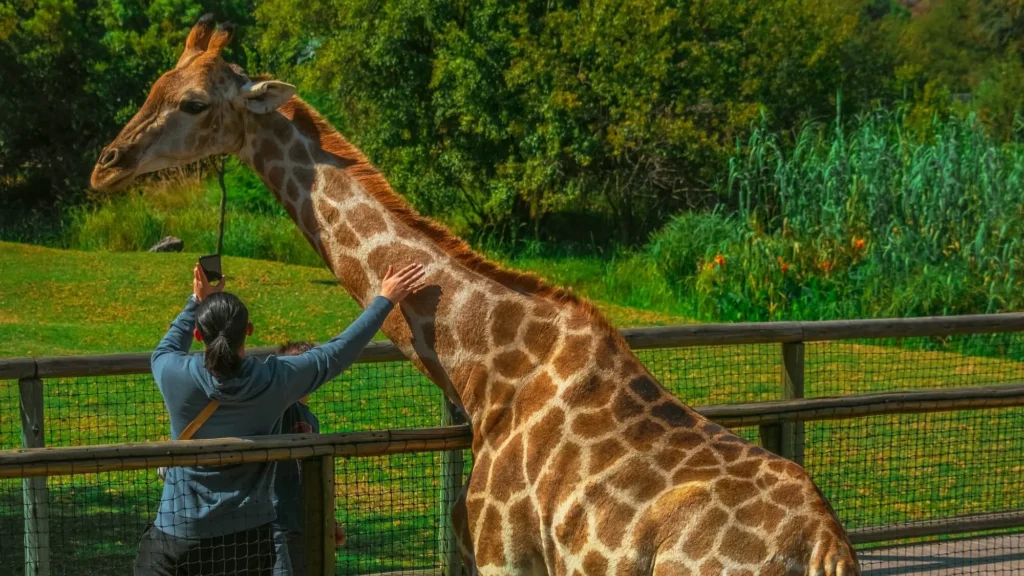
Marine encounters are not automatically harmless
OMarine wildlife tourism can feel gentler because no animal is behind bars.
But harm can still happen in the water.
Boats can crowd whales and dolphins. Snorkelers can chase turtles. Tourists can touch rays, sharks, starfish or coral. Guides can feed fish to guarantee photos. Divers can get too close. Nesting beaches can become crowded. Flash photography and noise can disturb animals in sensitive moments.
Just because an animal can swim away does not mean we are not disturbing it.
This matters especially in island destinations, where marine life is often one of the main reasons travelers come. A turtle sighting, a reef dive or a whale watching trip can be unforgettable — but the rules exist for a reason.
Do not touch marine animals. Do not stand on coral. Do not chase wildlife for a better shot. Do not support operators who crowd, bait or harass animals to satisfy tourists.
The best underwater encounters are usually the ones where we remember that we are visitors in a world that is not ours.
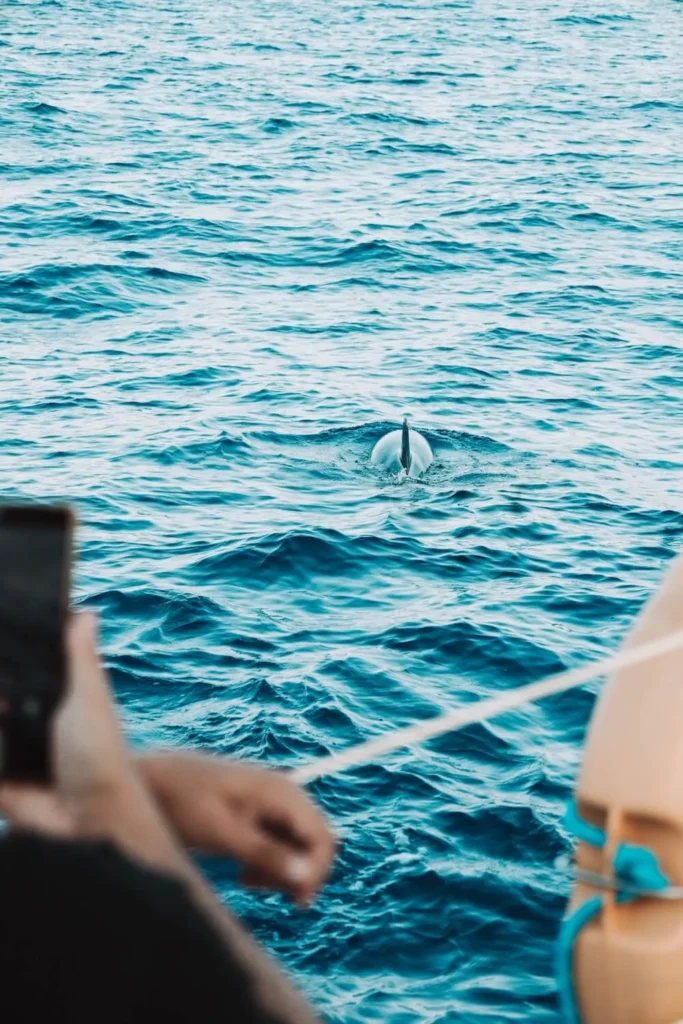
Working animals need nuance too
Not every animal in tourism is wildlife.
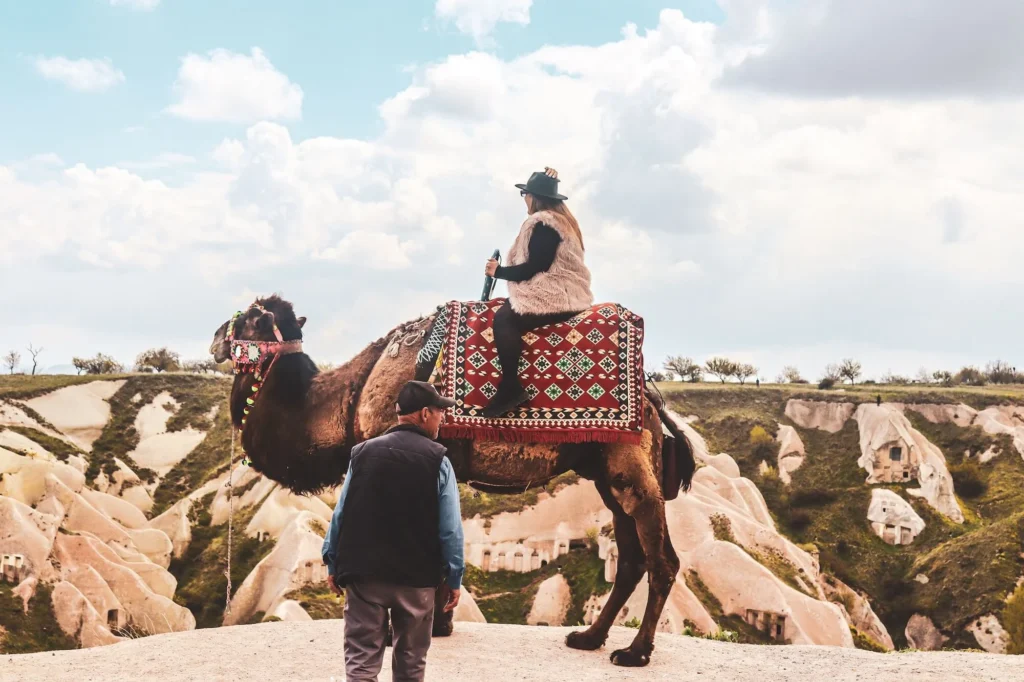
Travelers also encounter horses, donkeys, camels, mules and other working animals. This is complicated because in many places these animals are tied to livelihoods, transport, family income and local economies.
It is too easy, and often unfair, to judge from the outside without understanding the local context.
But cultural context does not erase suffering.
Look for the basics. Does the animal have shade, water and rest? Is it overloaded? Are there visible wounds or sores? Is the equipment rubbing or cutting into the skin? Is the animal limping, exhausted, too thin, too young or too old for the work? Is the handler using fear or pain? Is there an alternative you can choose?
Respecting local livelihoods does not mean ignoring animal welfare.
Sometimes the most responsible choice is to walk. Sometimes it is to choose another operator. Sometimes it is to pay fairly for a shorter, better-managed ride. Sometimes it is simply to refuse an experience that looks normal only because tourists have stopped questioning it.
Why “I love animals” is not enough
Many harmful animal experiences are sold to people who genuinely love animals.
That is what makes them so effective.
We tell ourselves the animal looks happy. We tell ourselves the money helps. We tell ourselves it is already there anyway. We tell ourselves it is only one photo.
But tourism works through demand.
Every ticket, review, photo and recommendation tells the industry what travelers are willing to pay for. If we keep paying for contact, more contact will be created. If we keep rewarding animal selfies, rides and performances, businesses will keep finding ways to supply them.
The market follows our desire.
That is why our desire needs questioning.
Loving animals should not mean wanting access to them at any cost. Sometimes it should mean accepting distance. Sometimes it should mean leaving without the photo. Sometimes it should mean choosing the less dramatic experience because it is better for the animal.
The best encounters do not always give us what we want.
They remind us that animals do not exist to serve our wanting.
Questions to ask before booking an animal encounter
Before booking any wildlife or animal experience, ask:
– Is the animal wild, captive, rescued or working?
– Can the animal choose to move away?
– Is touching, riding, feeding, holding or posing part of the experience?
– Is the animal behaving naturally?
– Is the experience built around observation or access?
– Does the venue breed animals?
– Where did the animals come from?
– What happens to animals that cannot be released?
– Are guides trained and are group sizes limited?
– Does the money support care, habitat protection, conservation or local communities?
And the question I keep coming back to:
Would this encounter still exist if the animal’s wellbeing mattered more than my experience?
Fair tourism note
Wildlife tourism is not only a traveler problem.
Governments, tour operators, hotels, online platforms, cruise lines, destination marketers and conservation organizations all shape what is sold as ethical. Travelers often see only the final product, not the system behind it.
But we are not powerless.
Every booking, photo, review and recommendation creates demand.
We may not be able to fix the entire wildlife tourism industry from one trip. But we can refuse to reward experiences that turn animals into props, performers or accessories to our travel memories.
The question we take home
The goal is not to avoid animals when we travel.
The goal is to meet them differently.
We can be moved by a whale without chasing it. We can admire an elephant without riding it. We can see a turtle without touching it. We can support conservation without demanding closeness.
The best wildlife encounters do not make us feel powerful.
They make us feel small.
They remind us that animals have lives, instincts, fears, habitats and needs that are not made more meaningful because we witnessed them.
Responsible wildlife tourism should leave animals freer, safer or better protected than before we arrived.
And if an experience cannot offer that, maybe it is not wonder we are paying for.
Maybe it is control.
FAQ: traveling during Ramadan and Eid