
Beyond Paradise: Why Beach Access Matters in Jamaica and Around the World
Jamaica is easy to describe through beauty: turquoise water, warm sand, cliffs at sunset, music drifting through the air, sea breeze moving through palms. It is one of those places travelers often approach with a ready-made image of paradise.
But the beach is never just a backdrop.

For visitors, a beach may be a place to rest for a week. For local communities, it can be childhood, livelihood, memory, fishing ground, family space, cultural inheritance and everyday freedom. It is where children learn to swim, where fishers begin their day, where vendors earn, where families gather, and where people stay connected to the island they call home.
That difference matters because travel comes with privilege. As tourists, we often arrive with passports, purchasing power, mobility, and the ability to leave again. We can enter a place temporarily, enjoy its most beautiful spaces, and return home without having to live with the long-term consequences of how those spaces are governed, developed, restricted or sold.
That does not mean travelers should feel guilty for enjoying Jamaica’s beaches. Joy is not the problem. Beauty is not the problem. Rest is not the problem.
The problem begins when we forget that our access may be easier, more comfortable, or better protected than the access of people who live there.
This is why beach access is not a side issue in sustainable travel. It is one of the clearest tests of whether tourism is only creating a beautiful experience for visitors — or whether it is also protecting dignity, access and belonging for the people who call the coast home.
We ask: Is the beach beautiful? But we should also ask: Who can still reach it? Who benefits from it? Who feels welcome there? And who has quietly been asked to make space for our comfort?
The beach is part of sustainability
Sustainable travel is often reduced to choices travelers can easily understand: avoiding plastic, using reef-safe sunscreen, choosing local tours, staying in smaller places, or supporting eco-conscious businesses. These choices matter. But they are only part of the picture.
UN Tourism defines sustainable tourism as tourism that takes account of its economic, social and environmental impacts while addressing the needs of visitors, the tourism industry, the environment and host communities.
That last part is essential. Host communities are not decoration. They are not simply the people who cook the food, clean the rooms, drive the taxis, play the music and smile in the brochure. They are part of the definition of sustainability itself.
A beach can be clean and still be unfair.
It can be beautiful and still be exclusionary.
It can generate money and still create loss.
That is where Jamaica’s beach access debate becomes so important.
Jamaica’s beach access debate is not simple
Jamaica’s beach access issue should not be reduced to one villain. It is shaped by law, land ownership, colonial history, resort development, public infrastructure, environmental protection, and the economic reality of an island where tourism matters deeply.
Tourism brings visible income. Jamaica’s Ministry of Tourism reported US$4.3 billion in tourism earnings in 2024, with around 4.3 million visitors. (jis.gov.jm) That matters. But tourism income is not the same as local benefit.
One important question is how much of the visitor dollar actually stays in Jamaica. This is known as tourism leakage: money that leaves the local economy through foreign ownership, imported goods, overseas booking platforms, international operators, or profits sent abroad.
This is why beach access cannot be discussed only through arrival numbers or hotel revenue. A public path that disappears, a fishing area that changes, a beach that becomes unaffordable or unwelcoming — these losses are harder to measure, but they matter.
They are opportunity costs: what a place gives up when one version of tourism becomes more valuable than all the others.
If tourism is truly creating prosperity, that prosperity should not depend on making local people less visible, less welcome, or less able to reach the sea.
A colonial-era law still shapes the coast
One reason Jamaica’s beach access debate feels so emotional is that it is not only about today’s hotels. It is also about yesterday’s laws.
Jamaica’s Beach Control Act dates back to 1956, before the country became independent. Jamaica’s Beach Access and Management Policy Green Paper describes the Act as the principal law related to beaches and notes that it vests ownership of the foreshore and the floor of the sea in the Crown. The same document also states that, under Jamaican common law, the public has no general right of access to the foreshore except for navigation or fishing.
That history matters.
The point is not that every hotel, investor or traveler today is personally responsible for colonial law. That would be too easy, and too unfair. The point is that modern tourism can still operate through legal structures shaped before independence — structures that affect who gets access, who needs permission, and who holds control.
This is the heart of the issue: beach access in Jamaica is not simply a question of whether a beach is “public” or “private.” It is about whether Jamaicans have clear, permanent, practical and affordable access to the sea.
A beach that people may enter only when someone else allows it is not the same as a beach that truly belongs to public life.
The movement asking for beach birthright
This is where the Jamaica Beach Birthright Environmental Movement, known as JaBBEM, becomes important.
JaBBEM advocates for what it calls beach birthright: stronger, constitutionally protected access to Jamaica’s beaches and the sea. The movement frames beach access not only as recreation, but as a matter of cultural life, spiritual practice, fishing, marine livelihoods, environmental justice and national belonging.
Its position is deliberately forceful. JaBBEM argues that Jamaicans should not have to depend on conditional access, hotel passes, private permission or changing policy moods to reach the sea. Whether one agrees with every part of the movement’s language or not, its central question is hard to dismiss:
Should people born on an island have to fight for meaningful access to its coast?
Recent reporting has described JaBBEM as a leading force behind legal challenges involving several contested coastal spaces, including Mammee Bay, Little Dunn’s River, Blue Lagoon, Bob Marley Beach and Flankers/Providence Beach. Campaigners argue that these places are not only scenic, but socially, economically and spiritually important to surrounding communities.
For travelers, this matters because it changes the frame. Beach access is not an abstract legal debate. It is lived by real communities, in real places, with real consequences.
The problem with language
Public does not always mean accessible
One of the most important things travelers need to understand is this: a beach can be public in theory and still difficult to use in real life.
Access is not only a legal word. It is a road, a footpath, a bus route, a sign, a parking area, a fair price, a bathroom, a lifeguard, shade, safety, and the feeling that you are allowed to be there.
Jamaica’s own policy documents recognize this complexity. The Beach Access and Management Policy Green Paper names concerns such as lack of adequate access points, insufficient public beaches of good standard, fees, and the loss of physical and visual access to the sea because of coastal development. It also says access does not necessarily mean free access, although fees should be reasonable and not prohibitive.
That distinction matters.
Exclusion does not always need a locked gate. Sometimes it looks like unclear signage. Sometimes it looks like a missing path. Sometimes it looks like a day pass priced for tourists. Sometimes it looks like a beach club where local life feels inconvenient.
And sometimes it looks like the phrase “private beach.”
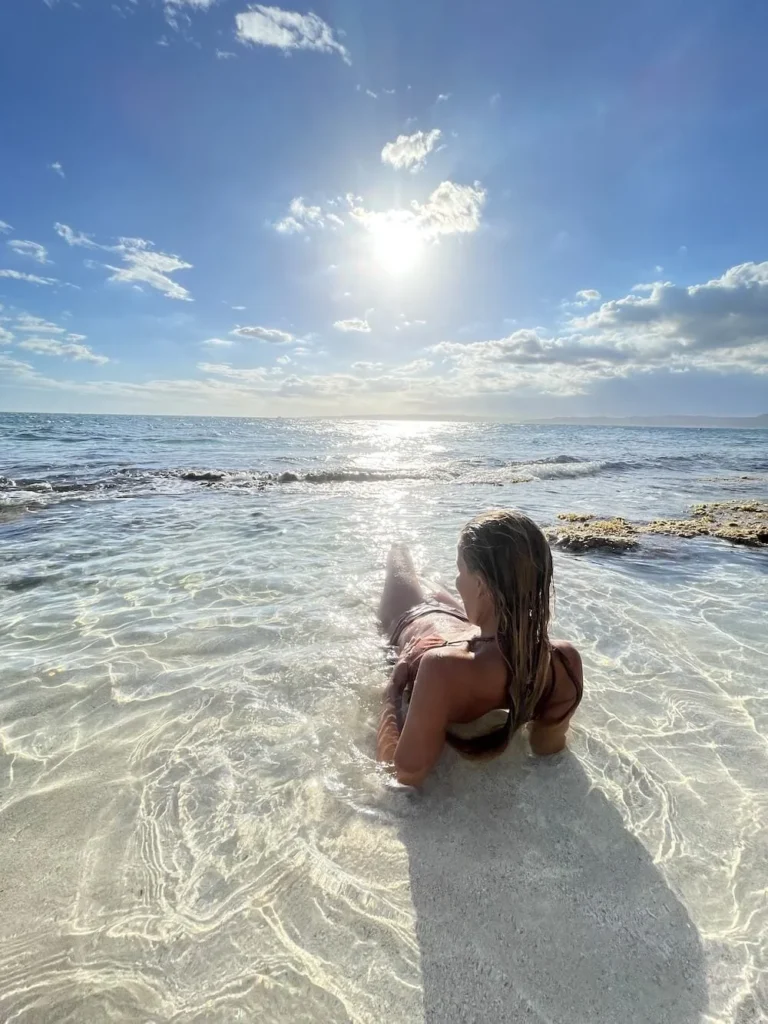
The problem with “private beach” language
“Private beach” sounds harmless when you are scrolling through hotel descriptions. It suggests quiet, comfort, exclusivity, fewer crowds, more peace.
But we should ask: private from whom?
From other tourists? From local families? From fishers? From vendors? From young people who grew up nearby? From the very communities whose culture makes Jamaica worth visiting in the first place?
Not every hotel uses the phrase in the same way. Sometimes “private beach” may refer to private loungers, private facilities or controlled hotel access rather than ownership of the entire shoreline. But the language still matters because it trains travelers to see exclusion as luxury.
It tells us that the best beach is the one where local life has been removed or made invisible.
That should make us pause.
Why do we associate luxury with the absence of local people? Why do we feel more relaxed when a destination has been curated around us? And when we say, “I paid to be here,” what are we forgetting?
What travelers can actually do
Travelers cannot solve Jamaica’s beach access debate alone. We are not lawmakers, planners, judges or community leaders.
But we are not powerless either. Our choices help shape what kind of tourism is rewarded.
First, question “private beach” as a selling point. When a hotel promotes one, do not automatically treat it as a positive. Ask what it means. Are the loungers private, or is access restricted? Is there a public access route? Are local residents able to reach the shoreline? Are fishers or vendors affected? Does the hotel support nearby communities?
You do not need to interrogate every property aggressively. But you can read differently. Stop treating exclusion as the highest form of luxury.
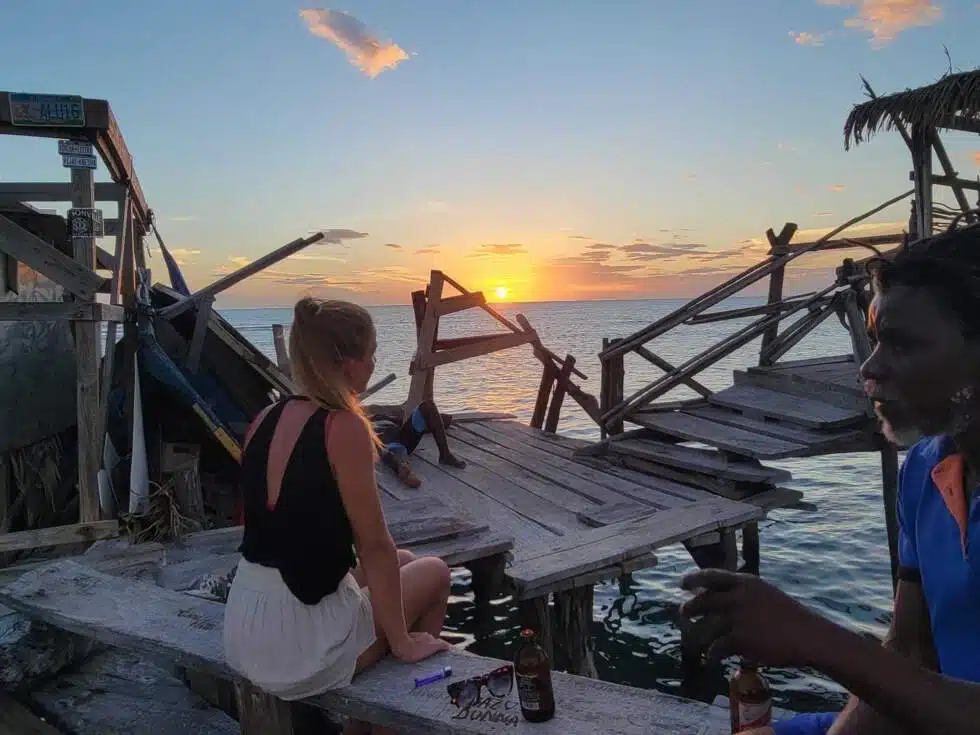
Second, spend beyond the resort. If you stay at an all-inclusive, make sure some of your money still reaches local businesses. Eat outside the property. Hire local guides. Visit community-run attractions. Buy from vendors respectfully. Use local transport where safe and practical. Tip fairly.
Tourism income matters more when it circulates.
Third, visit public and community beaches respectfully. Public beaches are not lesser beaches. They are often where you understand a destination more honestly. Go with humility. Pay reasonable entry or maintenance fees where they genuinely support facilities. Do not photograph families, fishers, vendors or children without consent. Do not treat everyday life as background content.
The point is not to consume “authenticity.” It is to share space respectfully.
Fourth, choose accommodations with local connection. This does not always mean avoiding larger hotels. It means looking for evidence of accountability. Does the property employ and promote Jamaicans in meaningful roles? Source locally? Work with nearby farmers, fishers, artists and guides? Support public access? Avoid misleading language? Invest in the community beyond charity photos?
A hotel is not automatically sustainable because it has refillable shampoo or paper straws. Sustainability also lives in land use, labor, procurement, access and accountability.
Finally, be careful with the word “paradise.”
Paradise is a tempting word. Travel writers use it often. Tourists use it instinctively. But paradise can flatten a place. It can make a country seem empty, timeless and available for our pleasure.
Jamaica is not an untouched fantasy. It is a real country with history, inequality, creativity, politics, grief, joy, resistance and pride.
Writing or speaking about Jamaica with more care does not make travel less beautiful. It makes it more honest.